
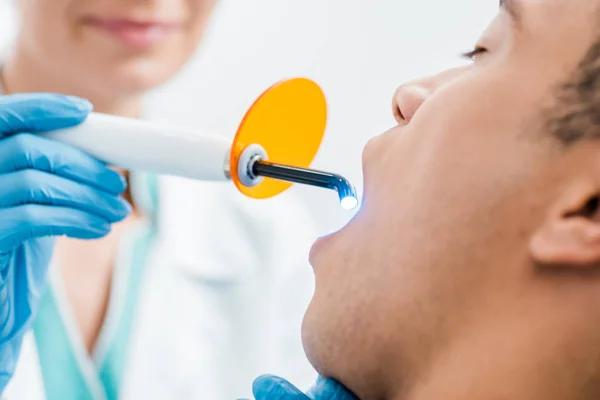
Laser dental technology has emerged as a groundbreaking advancement in the field of dentistry, significantly enhancing the success rates of dental implants and expediting recovery processes. This innovative approach leverages the precision and versatility of laser systems to improve clinical outcomes, offering patients a more comfortable and efficient treatment experience.
Dental implants have become an increasingly popular solution for replacing missing teeth, providing both functional and aesthetic benefits. However, traditional implant procedures can involve lengthy recovery times and potential complications such as infection or inflammation. Laser technology addresses these challenges by offering minimally invasive techniques that promote faster healing and reduce postoperative discomfort.
One of the key advantages of laser dental technology is its ability to precisely target specific areas without affecting surrounding tissues. This precision minimizes trauma during procedures, leading to less bleeding and swelling compared to conventional methods. As a result, patients often experience shorter recovery periods and reduced pain after surgery.
Moreover, lasers are effective in sterilizing surgical sites due to their high-energy beams that eliminate bacteria with remarkable efficiency. This sterilization capability is crucial in preventing infections that could compromise implant success. By creating an optimal environment for osseointegration—get the latest updates implant fuses with the jawbone—lasers enhance long-term stability and functionality of dental implants.
The use of lasers also facilitates better soft tissue management around implants. Gingival tissues play a vital role in supporting implants; therefore, maintaining their health is essential for successful outcomes. Lasers enable precise reshaping or removal of gum tissue when necessary, promoting healthy integration between gums and implants while minimizing discomfort.
In addition to improving surgical outcomes, laser technology offers significant benefits during post-operative care. Patients undergoing laser-assisted procedures generally report less pain compared to traditional methods because lasers stimulate natural healing responses within tissues through photobiomodulation—a process where light energy promotes cellular regeneration at molecular levels.
